
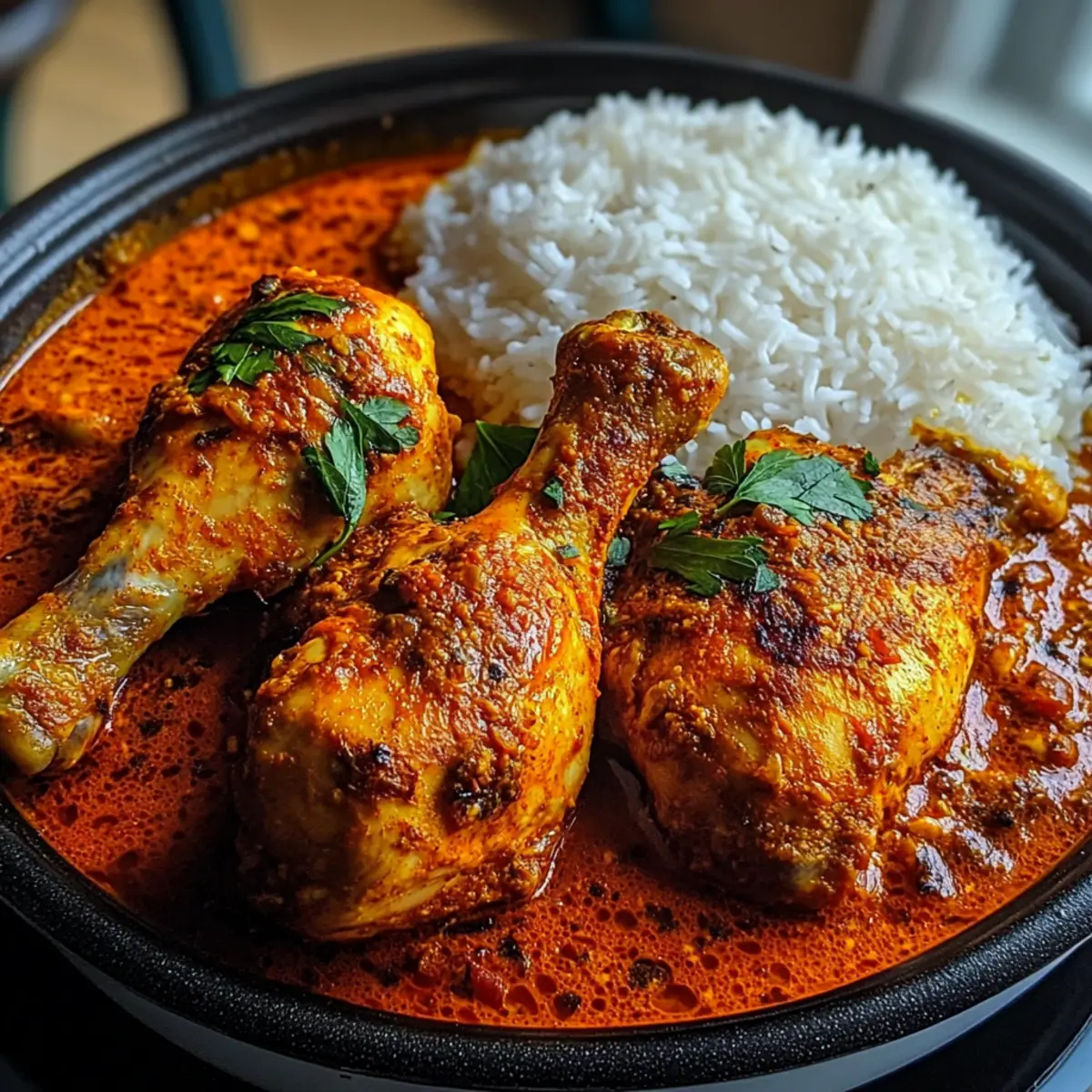
In a humble kitchen, you might overhear friends raving about the unmistakable aroma wafting from a pot of Nigerian Chicken Stew—each word a testament to its rich heritage. This hearty comfort food is a glorious dance of spices and colors, uniting family and friends with every delicious bite. By simmering tender chicken in a vibrant tomato-pepper sauce, this dish effortlessly brings the warmth of West African hospitality to your table. Perfectly paired with fluffy rice or sweet fried plantains, it’s not just a meal; it’s an experience that transforms any ordinary day into a cherished gathering. Plus, it’s a quick dish to whip up, making it a reliable go-to for busy weeknights or weekend feasts. Are you ready to dive into this spicy, soul-soothing delight?

Why is Nigerian Chicken Stew Unforgettable?
Bold Flavors: This stew showcases a dynamic blend of spices, from earthy curry powder to fiery scotch bonnet peppers, ensuring every bite is a flavorful journey.
Comforting Heartiness: With tender chicken simmered in a rich tomato-pepper sauce, this dish offers a satisfying meal that wraps you in warmth.
Versatile Ingredients: Feel free to substitute chicken with beef or shrimp, or serve it over rice, boiled yams, or even cauliflower rice for a twist.
Quick and Easy: With a straightforward cooking process, you can whip up this delightful meal in under an hour, making it perfect for busy weeknights.
Crowd-Pleaser: Impress family and friends with this classic dish that promises to unite everyone around the table, just like an authentic family gathering.
Nigerian Chicken Stew Ingredients
Get ready to create an authentic dish with these essential ingredients!
For the Stew
• Chicken – Main protein; use bone-in for deeper flavor, or opt for boneless with adjusted cooking time.
• Salt & Black Pepper – Essential for enhancing flavor; adjust according to personal taste.
• Paprika – Adds sweetness and rich color; smoked paprika can offer a unique twist.
• Curry Powder – Infuses warmth and aromatic depth into the stew.
• Thyme – Brings a fragrant earthiness; both fresh or dried thyme work beautifully.
• Onion – A crucial base flavor for the stew, building the savory essence.
• Vegetable Oil – For frying; substitute with olive oil for a healthier option.
• Roma Tomatoes – Provides acidity and natural sweetness; fresh or canned are both great choices.
• Red Bell Pepper – Adds sweetness and vibrant color to the dish.
• Small Red Onion – Enhances the overall oniony flavor without overpowering the other ingredients.
• Scotch Bonnet Peppers – Inflicts the signature heat; swap with habaneros for a similar kick, or leave out for milder taste.
• Tomato Paste – Concentrates flavor and thickens the sauce beautifully.
• Garlic Powder – Adds umami depth to the stew, enriching the overall profile.
• Ginger Powder – Brings warmth and spice; a must for authentic flavor.
• Bouillon Cube – Intensifies the savory richness of the stew.
• Fresh Parsley or Cilantro – Perfect for garnish, adding brightness and freshness.
• Lime or Scallions – Optional, but these give a lively touch when serving.
This Nigerian Chicken Stew recipe blends spices and fresh ingredients seamlessly, making it a must-try for your next home-cooked meal!
Step‑by‑Step Instructions for Nigerian Chicken Stew
Step 1: Marinate Chicken
In a large bowl, combine the chicken pieces with salt, black pepper, paprika, curry powder, thyme, and chopped onion. Make sure all the chicken is evenly coated in this flavorful mix. Allow it to marinate for at least 30 minutes at room temperature, or preferably refrigerate for up to 2 hours for deeper flavor absorption.
Step 2: Sear Chicken
Heat about 2-3 tablespoons of vegetable oil in a large skillet over medium-high heat. Once the oil is shimmering, add the marinated chicken pieces, browning them on all sides for about 8-10 minutes until golden. Use tongs to turn them for even cooking, then remove the browned chicken and set aside on a plate.
Step 3: Prepare Sauce Base
In a blender, combine the Roma tomatoes, red bell pepper, small red onion, and the scotch bonnet pepper if you like heat. Blend until smooth, creating a vibrant sauce. This will be the flavorful base of your Nigerian Chicken Stew, so ensure it’s well blended and uniform.
Step 4: Cook Sauce
In the same skillet used for searing the chicken, add the tomato paste and cook for about 2 minutes over medium heat, stirring frequently until it darkens slightly and becomes aromatic. Then, add the blended tomato mixture and stir well, allowing it to cook for about 10 minutes, continuously stirring until it thickens.
Step 5: Season Sauce
Once the sauce has thickened, stir in garlic powder, ginger powder, and the bouillon cube, adjusting the salt as needed. Bring the mixture to a gentle simmer, then return the browned chicken pieces to the skillet, ensuring they are submerged in the sauce for full flavor integration.
Step 6: Simmer Stew
Reduce the heat to low and cover the skillet, letting the Nigerian Chicken Stew simmer for 25-30 minutes. This allows the chicken to tenderize thoroughly and the flavors to meld beautifully. Stir occasionally and check the chicken for tenderness; it should be cooked through and easy to pull apart.
Step 7: Garnish & Serve
Once cooked, remove from heat and garnish the stew with fresh parsley or cilantro for added brightness. Serve hot over fluffy rice, alongside fried plantains, or boiled yams. Let the rich aroma of this nourishing Nigerian Chicken Stew fill your home, inviting everyone to the table!
How to Store and Freeze Nigerian Chicken Stew
Fridge: Store cooled stew in airtight containers for up to 4 days. Reheat thoroughly on the stovetop or microwave until steaming hot.
Freezer: Freeze portions in airtight containers for up to 3 months. Thaw overnight in the fridge and reheat on the stovetop, adding a splash of water if needed to maintain consistency.
Room Temperature: Avoid leaving Nigerian Chicken Stew at room temperature for more than 2 hours to prevent bacterial growth.
Reheating: When reheating, ensure the stew reaches a minimum internal temperature of 165°F (75°C) to enjoy safely and deliciously.
Variations & Substitutions for Nigerian Chicken Stew
Feel free to explore these delightful variations that allow your Nigerian Chicken Stew to shine even brighter with personalized twists!
-
Different Proteins: Swap chicken for beef, shrimp, or tofu, adjusting cook times as necessary for perfect tenderness. Each protein brings its unique flavor to the dish, offering something delicious for everyone!
-
Vegetarian Option: For a meatless version, replace chicken with hearty vegetables and chickpeas. Not only does this create a satisfying dish, but it also boasts vibrant colors and textures.
-
Heat Levels: Begin with one scotch bonnet for mild spice or add an extra pepper for more heat. Taste and adjust as you go to find your perfect balance—it’s a culinary adventure in your own kitchen!
-
Flavor Boosts: Incorporate a splash of coconut milk for a creamy texture or add fresh spinach during the last few minutes of cooking for added nutrients and a pop of color.
-
Serving Bases: Instead of traditional rice, serve your stew over quinoa, couscous, or baked sweet potatoes for a hearty and nutritious twist—each base brings its own flair!
-
Extra Veggies: Toss in some chopped carrots, bell peppers, or zucchini during simmering for a heartier stew that includes a rainbow of veggies. This adds a lovely crunch and sweetness to each spoonful.
-
Garlic Lovers: If you adore garlic, increase the garlic powder or add fresh minced garlic at the start for a rich, aromatic flavor that envelops your stew.
-
Herb Variations: Experiment with herbs like bay leaves or oregano, or replace parsley with fresh basil for a unique flavor twist that surprises the palate.
By trying out these variations, you’ll not only make the dish your own but also keep the excitement alive for every meal! If you’re interested in pairing your stew with delicious sides, consider recipes like Grilled Chicken Broccoli or Crockpot Buffalo Chicken. These companions create an unforgettable dinner experience right at home!
What to Serve with Nigerian Chicken Stew?
Creating a meal that complements the robust and flavorful essence of this dish will elevate your dining experience to new heights.
-
Fluffy White Rice:
A classic pairing that absorbs the savory sauce beautifully, offering a satisfying base for the rich stew. -
Fried Sweet Plantains:
The subtle sweetness contrasts wonderfully with the spice, providing a delightful balance of flavors and textures. -
Boiled Yams:
Tender and starchy yams soak up the stew, enhancing the heartiness of the meal while adding a creamy element. -
Cauliflower Rice:
For a healthier twist, cauliflower rice serves as a light alternative, allowing the bold flavors of the stew to shine while keeping the dish low-carb. -
Spicy Coleslaw:
A crunchy, tangy side with shredded cabbage and a hint of heat brightens the meal, adding a refreshing contrast to the warm stew. -
Ginger Beer:
This fizzy, mildly spiced drink cleanses the palate and enhances the meal, complementing the layers of flavors in the stew. -
Chocolate Cake:
For dessert, a simple chocolate cake offers a sweet finish, perfect for wrapping up a delightful culinary experience together.
Every pairing enhances the robust flavor of Nigerian Chicken Stew, creating a memorable meal full of warmth and joy!
Make Ahead Options
These Nigerian Chicken Stew preparations are a lifesaver for busy cooks wanting to save time during hectic weekdays! You can marinate the chicken up to 24 hours in advance, allowing the flavors to deepen—just refrigerate it in an airtight container. Additionally, the stew base (the blended tomato mixture) can be prepared up to 3 days prior and stored in the fridge, so it’s ready to cook when you are. When you’re ready to finish the dish, simply sear the marinated chicken, stir in the prepped base, simmer, and voilà! You’ll enjoy a comforting and vivid meal just as delicious as if you made it fresh.
Expert Tips for Nigerian Chicken Stew
• Marinate Wisely: Allow chicken to marinate for at least 30 minutes or up to 2 hours for deeper flavor absorption in your Nigerian Chicken Stew.
• Sear for Flavor: Don’t rush the browning process; it adds essential flavor and texture, enhancing the richness of the stew.
• Adjusting Heat: If you’re sensitive to spice, start with one scotch bonnet pepper, taste, and gradually add more to suit your palate.
• Simmer Well: Simmering uncovered allows the sauce to thicken beautifully; don’t be tempted to cover it too soon!
• Storage Solutions: Cool and store leftovers in airtight containers for up to 4 days in the fridge, or freeze for up to 3 months—this stew tastes even better the next day!

Nigerian Chicken Stew Recipe FAQs
What type of chicken should I use for Nigerian Chicken Stew?
Absolutely! Bone-in chicken provides a richer flavor and juiciness due to the marrow, but boneless chicken can be used as well. Just remember to adjust the cooking time down slightly, aiming for around 20-25 minutes for boneless chicken to ensure it’s tender and flavorful.
How long can I store leftover Nigerian Chicken Stew in the fridge?
You can store the stew in airtight containers for up to 4 days in the refrigerator. Make sure it has thoroughly cooled before sealing to avoid condensation which can affect the stew’s texture on reheating.
Can I freeze Nigerian Chicken Stew?
Very much so! To freeze, allow the stew to cool completely, then portion it into airtight containers or freezer bags. It can last for up to 3 months in the freezer. When ready to eat, thaw overnight in the fridge, and reheat on the stovetop, adding a little water if necessary to adjust the consistency.
What if the stew is too spicy?
If you’ve added too much heat, no worries! You can balance the spice by incorporating more creaminess with a splash of coconut milk or a dollop of sour cream. Alternatively, serving it over a bed of rice or adding more vegetables like carrots or potatoes can also help mellow out the heat.
Can I use this recipe with other ingredients?
Absolutely! This stew’s versatile! You can swap the chicken for beef or shrimp, but be sure to adjust the cooking times accordingly. For a heartier dish, feel free to add vegetables like carrots and bell peppers during the simmering phase for an extra nutrition boost.
Is there anything I should consider for dietary restrictions or allergies?
Of course! If you’re preparing this meal for someone with allergies, be cautious of the scotch bonnet peppers as they can be extremely spicy. You can always omit them or substitute with milder peppers. As for other ingredients like bouillon cubes, check for any allergens used in processed varieties.

Nigerian Chicken Stew: A Hearty and Spicy Comfort Meal
Ingredients
Equipment
Method
- In a large bowl, combine chicken pieces with salt, black pepper, paprika, curry powder, thyme, and chopped onion. Marinate for at least 30 minutes or refrigerate for up to 2 hours.
- Heat vegetable oil in a large skillet over medium-high heat. Add marinated chicken pieces, browning on all sides for about 8-10 minutes until golden. Remove and set aside.
- In a blender, combine Roma tomatoes, red bell pepper, small red onion, and scotch bonnet pepper if desired. Blend until smooth.
- In the same skillet, add tomato paste and cook for about 2 minutes, stirring frequently. Add blended tomato mixture and cook for about 10 minutes until thickened.
- Stir in garlic powder, ginger powder, and bouillon cube. Adjust salt as needed. Return browned chicken to the skillet, ensuring it is submerged in the sauce.
- Reduce heat to low and cover, simmering for 25-30 minutes until chicken is tender and flavors meld. Stir occasionally.
- Garnish with fresh parsley or cilantro. Serve hot over rice, alongside fried plantains or boiled yams.
Leave a Reply