
As I stood in my kitchen, the aroma of sizzling garlic and ginger filled the air, immediately whisking me away to a bustling street market in Mongolia. This moment sparked my desire to recreate the comforting taste of home with a dish that holds a special place in my heart: Mongolian Ground Beef Noodles. Perfect for those busy weeknights, this recipe is a harmonious blend of savory, sweet, and umami flavors, all wrapped around tender noodles that are quick to whip up. Not only is it customizable with your choice of protein and noodles—think ground chicken or even zucchini noodles for a low-carb twist—it’s also meal prep-friendly, making it a lifesaver for anyone looking to ditch fast food for something deliciously homemade. Are you ready to dive into this quick and flavorful dinner that will leave everyone asking for seconds?
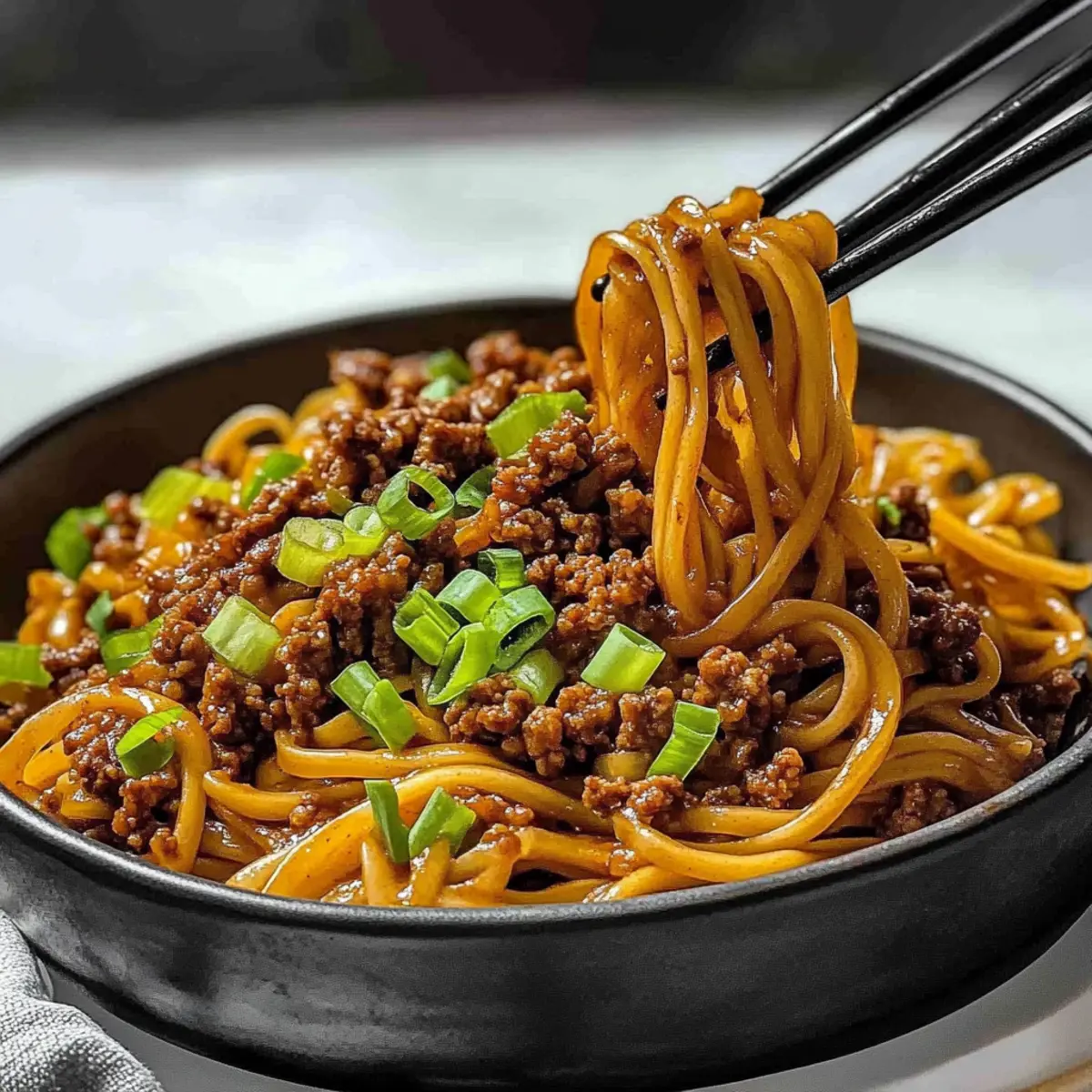
Why Make Mongolian Ground Beef Noodles?
Quick & Easy: This recipe is a lifesaver on hectic evenings, ready in just 30 minutes!
Flavor Explosion: The delightful mix of savory and sweet notes in this dish will tantalize your taste buds.
Customizable Options: Tailor your meal with various proteins like ground turkey or plant-based meats, and swap in rice noodles or zucchini noodles for unique twists.
Meal Prep Friendly: Perfect for batch cooking, this dish keeps well and tastes fantastic reheated.
Kid-Approved: With its inviting flavors and fun textures, it’s sure to be a hit among the entire family.
Combine it with a fresh salad or some steamed veggies, and you’ve got a complete meal that’s sure to impress!
Mongolian Ground Beef Noodles Ingredients
For the Noodles
• Spaghetti, Udon, or Rice Noodles – Choose your favorite as the base; each brings a unique texture and flavor.
For the Beef
• Lean Ground Beef – Opt for an 80% lean mix to ensure a flavorful yet less greasy dish.
For the Aromatics
• Vegetable Oil – Aids in browning the beef and preventing it from sticking to the pan.
• Garlic – Fresh garlic adds an authentic aroma and rich flavor; minced is best for even distribution.
• Ginger – Fresh ginger provides warmth and spice, elevating the overall taste.
For the Sauce
• Soy Sauce – This key ingredient adds deep umami flavor; low-sodium options keep it lighter.
• Brown Sugar – Balances the saltiness of the soy sauce with a touch of sweetness; honey is an alternative.
• Beef Broth – Enhances sauce depth; can be swapped with water or vegetable broth for a lighter version.
• Hoisin Sauce – Brings complexity and sweetness; it can be omitted if unavailable.
• Cornstarch – Thickens the sauce for a glossy finish; mix with water to create a slurry.
For the Finishing Touches
• Red Pepper Flakes – Optional for those who enjoy adding heat to their dish, allowing for customization.
• Green Onions – Adds a fresh crunch; use both in cooking and as a garnish for added color.
• Sesame Seeds – Optional sprinkle for texture and nutty flavor, enhancing visual appeal.
With these Mongolian Ground Beef Noodles ingredients, you’re well on your way to whipping up a delicious meal that will leave everyone asking for seconds!
Step‑by‑Step Instructions for Mongolian Ground Beef Noodles
Step 1: Cook the Noodles
Begin by boiling a large pot of water. Once it’s at a rolling boil, add your choice of noodles—spaghetti, udon, or rice noodles. Cook according to package instructions, typically around 8-10 minutes, until al dente. Drain the noodles and toss them with a drizzle of vegetable oil to prevent sticking while you prepare the rest of the dish.
Step 2: Brown the Ground Beef
In a large skillet over medium-high heat, pour in a tablespoon of vegetable oil. Once the oil is hot, add the lean ground beef and break it apart with a spatula. Cook for 5-7 minutes, stirring occasionally, until the beef is fully browned and there are no pink bits left. The beef should be juicy yet not greasy, forming a flavorful base for your Mongolian Ground Beef Noodles.
Step 3: Add Aromatics
Reduce the heat to medium and add minced garlic and freshly grated ginger to the skillet. Sauté these aromatics for about 1 minute, stirring them with the browned beef until they become fragrant. Be sure to watch closely to prevent them from burning, as this could alter the flavor of your dish.
Step 4: Prepare the Sauce
In a separate bowl, whisk together soy sauce, brown sugar, and beef broth until the sugar is completely dissolved. This sauce will create the rich, savory glaze that coats your Mongolian Ground Beef Noodles. Be sure to have it ready before proceeding to the next step for smooth cooking.
Step 5: Combine Sauce and Beef
Pour the sauce mixture into the skillet with the cooked ground beef and aromatics. Increase the heat to medium-high and bring it to a bubbling simmer, allowing the flavors to meld together for about 2-3 minutes. You should see the sauce slightly thicken and become glossy, enveloping the beef in a savory coat.
Step 6: Thicken the Sauce
To achieve a thicker, glossy sauce, create a cornstarch slurry by mixing cornstarch with a little water in a small bowl. While stirring the sauce in the skillet, gradually pour in the slurry. Keep stirring for about 1-2 minutes until the sauce reaches your desired thickness, ensuring every bit of the Mongolian Ground Beef Noodles gets coated.
Step 7: Mix in the Noodles
Add the cooked noodles to the skillet, tossing them with the sauce and beef mixture. Lower the heat to low and continue stirring gently for an additional 1-2 minutes, ensuring every strand of noodle is coated with that delicious sauce. The noodles will absorb the flavors, enhancing your dish’s overall taste.
Step 8: Finish and Serve
Remove the skillet from heat and stir in a splash of sesame oil and half of the chopped green onions for extra flavor. Serve the Mongolian Ground Beef Noodles garnished with the remaining green onions and a sprinkle of sesame seeds for texture. The combination of colors and aromas will invite everyone to the table!
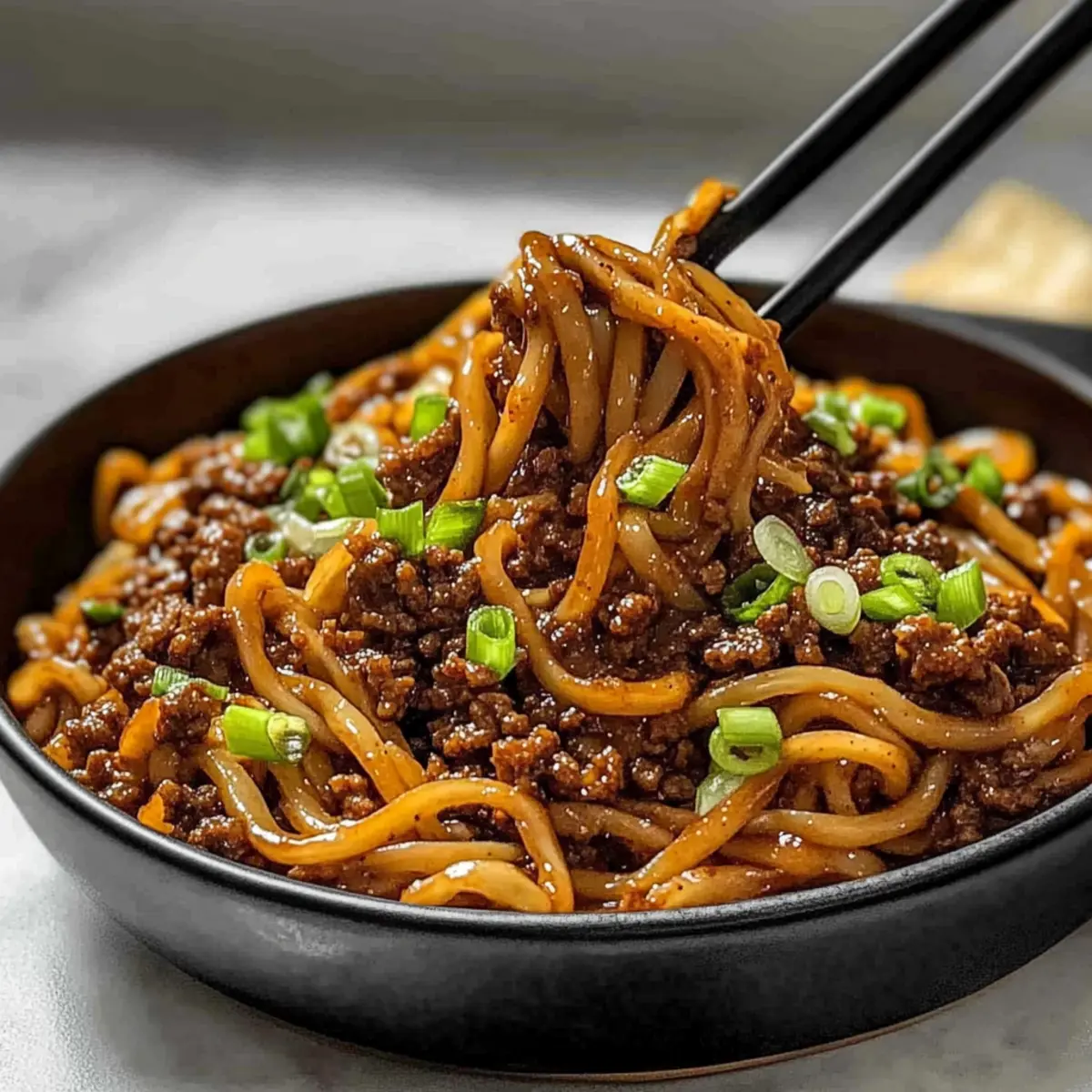
What to Serve with Mongolian Ground Beef Noodles
Elevate your dinner experience with some delightful pairings that complement your homemade noodles beautifully.
-
Crispy Asian Salad: Refreshing and crunchy, a vibrant salad with cabbage, carrots, and sesame dressing adds a crisp contrast to the rich noodles.
-
Garlic Steamed Broccoli: Tender broccoli lightly steamed with garlic fits perfectly, offering a healthful, slightly bitter balance against the dish’s sweetness.
-
Sesame Ginger Snap Peas: Lightly sautéed snap peas in sesame oil provide a satisfying crunch and enhance the Asian flavor profile of your meal.
-
Spicy Edamame: These protein-packed pods, seasoned with sea salt and chili flakes, bring a delightful, savory bite that pairs wonderfully with the noodles.
-
Miso Soup: A warm bowl of umami-rich miso soup offers a comforting, traditional touch, making it a perfect starting course for your meal.
-
Iced Green Tea: This light, refreshing beverage helps cleanse the palate between each savory bite and brings a soothing contrast to the meal.
-
Mango Sticky Rice: For dessert, this sweet Thai classic featuring coconut-infused sticky rice and fresh mango will wrap up your dinner on a delightful note.
-
Chocolate Boba Tea: You could also pair your meal with a trendy boba tea, offering a fun and chewy finish that delights both kids and adults.
Expert Tips for Mongolian Ground Beef Noodles
Choose Lean Beef: Opt for 80% lean ground beef to keep your dish flavorful without excess grease that can overwhelm the recipe.
Cook Noodles Al Dente: Slightly undercook your noodles to prevent them from becoming mushy when mixed with the sauce. They will finish cooking in the skillet.
Pre-Mix the Sauce: Mixing the sauce ingredients ahead of time ensures a smoother cooking process and helps avoid burning the garlic and ginger.
Watch the Heat: Carefully control the heat when adding garlic and ginger to prevent burning. Overcooked aromatics can alter the flavor profile of your Mongolian Ground Beef Noodles.
Taste Before Serving: Always sample your dish before plating! Adjust seasoning with more soy sauce for saltiness or a pinch of sugar for sweetness, ensuring a perfectly balanced flavor.
How to Store and Freeze Mongolian Ground Beef Noodles
Fridge: Store any leftovers in an airtight container for up to 3 days. Reheat gently on the stove or in the microwave, adding a splash of water to keep the noodles moist.
Freezer: For longer storage, freeze the beef and sauce separately in airtight containers for up to 3 months. Thaw overnight in the fridge before reheating.
Noodles: If you want to freeze noodles, it’s best to do so before mixing them with sauce. Cooked noodles can be frozen in a sealed bag for up to 2 months and reheated in hot water.
Reheating: To reheat, gently warm the beef and sauce in a skillet or microwave, then toss with the noodles. Adjust seasoning if needed, adding a bit more soy sauce for flavor.
Make Ahead Options
Mongolian Ground Beef Noodles are a fantastic choice for meal prep enthusiasts looking to save time on busy weeknights! You can prepare the sauce—combining soy sauce, brown sugar, and beef broth—up to 3 days in advance and store it in the refrigerator. Additionally, cook your noodles and toss them with a bit of oil to prevent sticking, and that’s good for about 24 hours before serving. To maintain great quality, refrigerate each component separately. When you’re ready to enjoy your Mongolian Ground Beef Noodles, simply reheat the beef and sauce in a skillet, add the noodles, and toss everything together until heated through. You’ll have a delicious meal ready in no time!
Variations & Substitutions for Mongolian Ground Beef Noodles
Explore these exciting twists to personalize your Mongolian Ground Beef Noodles, making each bite uniquely yours!
-
Protein Swap: Substitute ground beef with ground chicken, turkey, or even plant-based meat alternatives for a lighter dish. The flavor profile remains delightful, and everyone can enjoy their favorite proteins.
-
Veggie Boost: Add bell peppers, broccoli, or snap peas to infuse color and nutrition. These veggies bring freshness and crunch, making the meal even more satisfying.
-
Gluten-Free Option: Use rice noodles and tamari instead of traditional soy sauce to cater to gluten-free diets. This swap retains the dish’s essence while accommodating dietary restrictions.
-
Creamy Touch: Consider adding a dollop of peanut butter for a nutty flavor that enhances the sauce’s complexity. Just mix it in with the other sauce ingredients for that luxurious taste.
-
Low-Carb Alternative: Swap traditional noodles for spiralized zucchini noodles. This fresh twist provides a hearty yet guilt-free option that everyone will love!
-
Heat Level Control: Infuse your dish with more heat by adjusting red pepper flakes to suit your spice tolerance. A touch of sriracha can also add an extra zing to the cook.
-
Noodle Variety: Experiment with different noodles like udon or soba noodles for a different texture or taste. Each noodle type brings a unique feel to the dish.
-
Sweetness Adjustment: Try substituting brown sugar with honey or maple syrup for a different sweetness note. Each alternative adds its unique character to the sauce, offering delightful versatility.
These variations cater to different tastes and dietary needs. For more delicious recipes that embrace customization, check out slow cooker Mongolian beef or consider adding vegetables to your meal with a ground turkey and zucchini skillet. Enjoy experimenting in the kitchen!
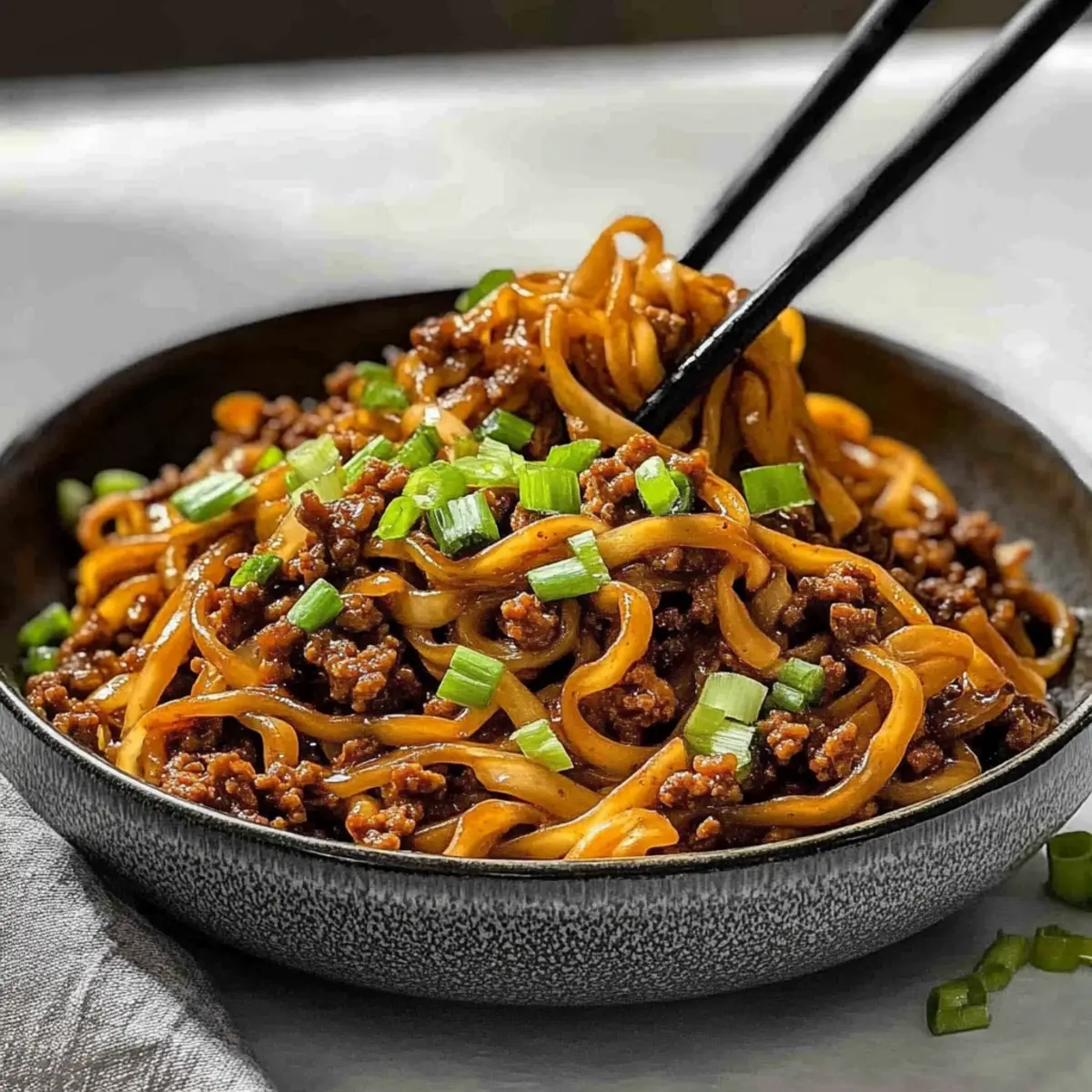
Mongolian Ground Beef Noodles Recipe FAQs
What type of noodles should I use for Mongolian Ground Beef Noodles?
You can use spaghetti, udon, or rice noodles based on your preference. Spaghetti gives a familiar texture, while udon provides a chewier bite. Rice noodles are gluten-free and offer a lighter option, perfect for those watching their carbs!
How should I store leftovers of Mongolian Ground Beef Noodles?
To keep your dish fresh, store leftovers in an airtight container in the refrigerator for up to 3 days. When reheating, add a splash of water to loosen the noodles and prevent them from drying out. This way, you can enjoy a flavorful meal that’s just as good as when you first made it!
Can I freeze Mongolian Ground Beef Noodles?
Absolutely! For freezing, it’s best to separate the beef and sauce from the noodles. Store the beef and sauce in airtight containers for up to 3 months. The noodles can also be frozen for up to 2 months. Thaw everything overnight in the fridge before reheating, ensuring you enjoy your meal without losing flavor or texture!
How can I customize this recipe for dietary restrictions?
You can easily adjust this recipe to meet dietary needs! For a gluten-free version, use rice noodles and tamari instead of soy sauce. If you’re looking for a low-carb option, zucchini noodles work great! Feel free to swap ground beef for chicken, turkey, or plant-based alternatives for a delicious twist.
What should I do if my sauce is too thin?
If your sauce isn’t thickening, make a cornstarch slurry by mixing 1 tablespoon of cornstarch with 2 tablespoons of cold water. Stir this mixture into your sauce while it simmers, and it’ll thicken up beautifully in just 1-2 minutes!
How do I know if my ground beef is cooked properly?
To ensure your ground beef is fully cooked, look for a brown color with no pink remaining. It should reach an internal temperature of 160°F (71°C) to ensure it’s safe to eat. Using lean ground beef minimizes excess grease, resulting in a tasty and healthy dish.
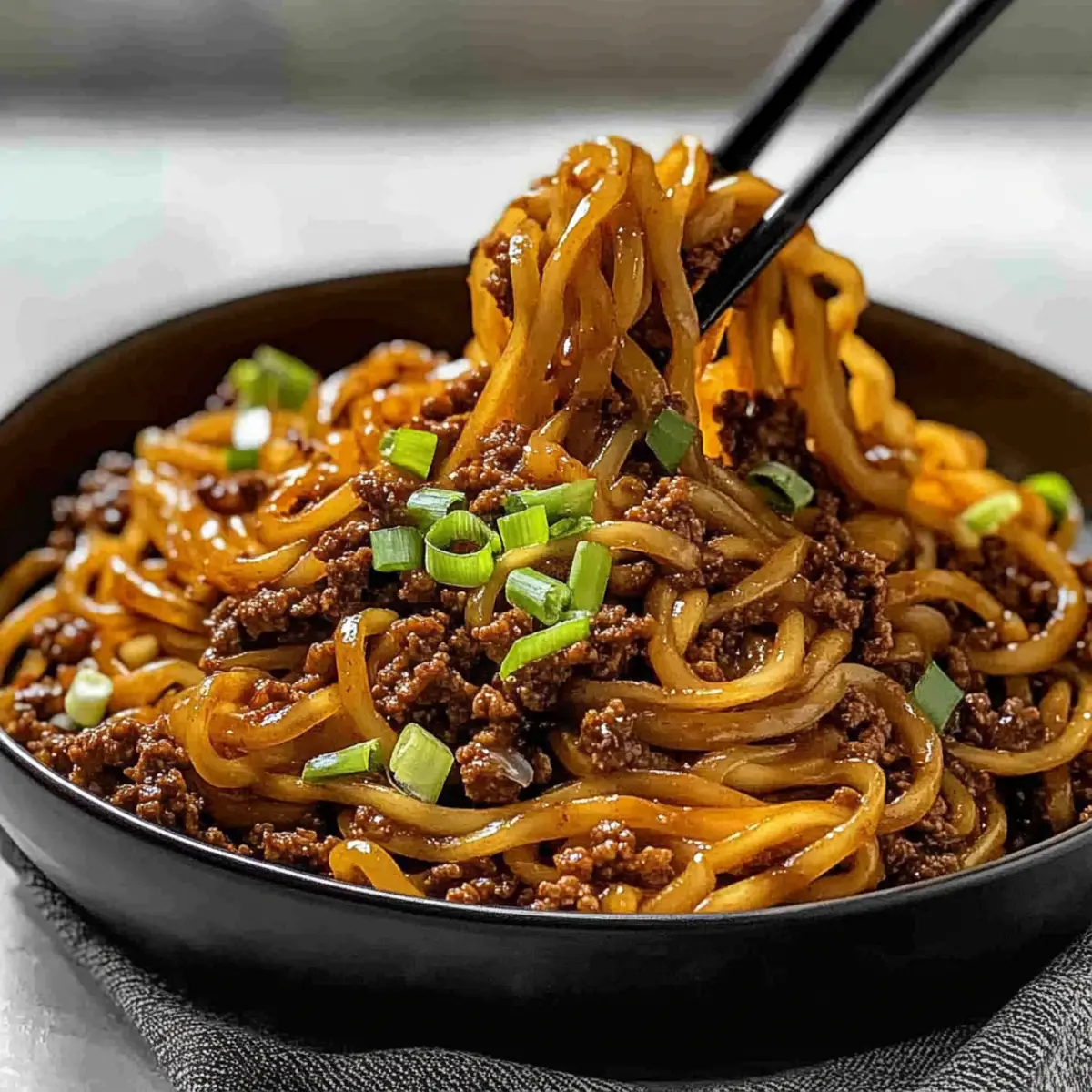
Savory Mongolian Ground Beef Noodles Ready in 30 Minutes
Ingredients
Equipment
Method
- Begin by boiling a large pot of water. Once it's boiling, add the noodles and cook according to package instructions for 8-10 minutes. Drain and toss with vegetable oil.
- In a skillet over medium-high heat, add vegetable oil and brown the ground beef for 5-7 minutes until fully cooked.
- Add minced garlic and grated ginger, sauté for 1 minute until fragrant.
- In a bowl, whisk together soy sauce, brown sugar, and beef broth until dissolved.
- Pour the sauce into the skillet with the beef, simmer for 2-3 minutes until slightly thickened.
- Create a cornstarch slurry and gradually add to the skillet, stirring for 1-2 minutes until sauce thickens.
- Add the cooked noodles, tossing to coat in the sauce for 1-2 minutes over low heat.
- Remove from heat, stir in sesame oil and half of the green onions. Serve garnished with remaining green onions and sesame seeds.
Leave a Reply